
Do I need orthodontics?
Orthodontics is not just about looks. Well-aligned teeth are easier to clean, wear less and spread chewing forces correctly. You may need treatment if you have:
- Crowded or gapped teeth.
- Overbite, open bite or crossbite.
- Malocclusion: your upper and lower teeth do not meet properly.
- Jaw joint discomfort related to your bite.
Types of orthodontics we offer
Invisible orthodontics (Invisalign)
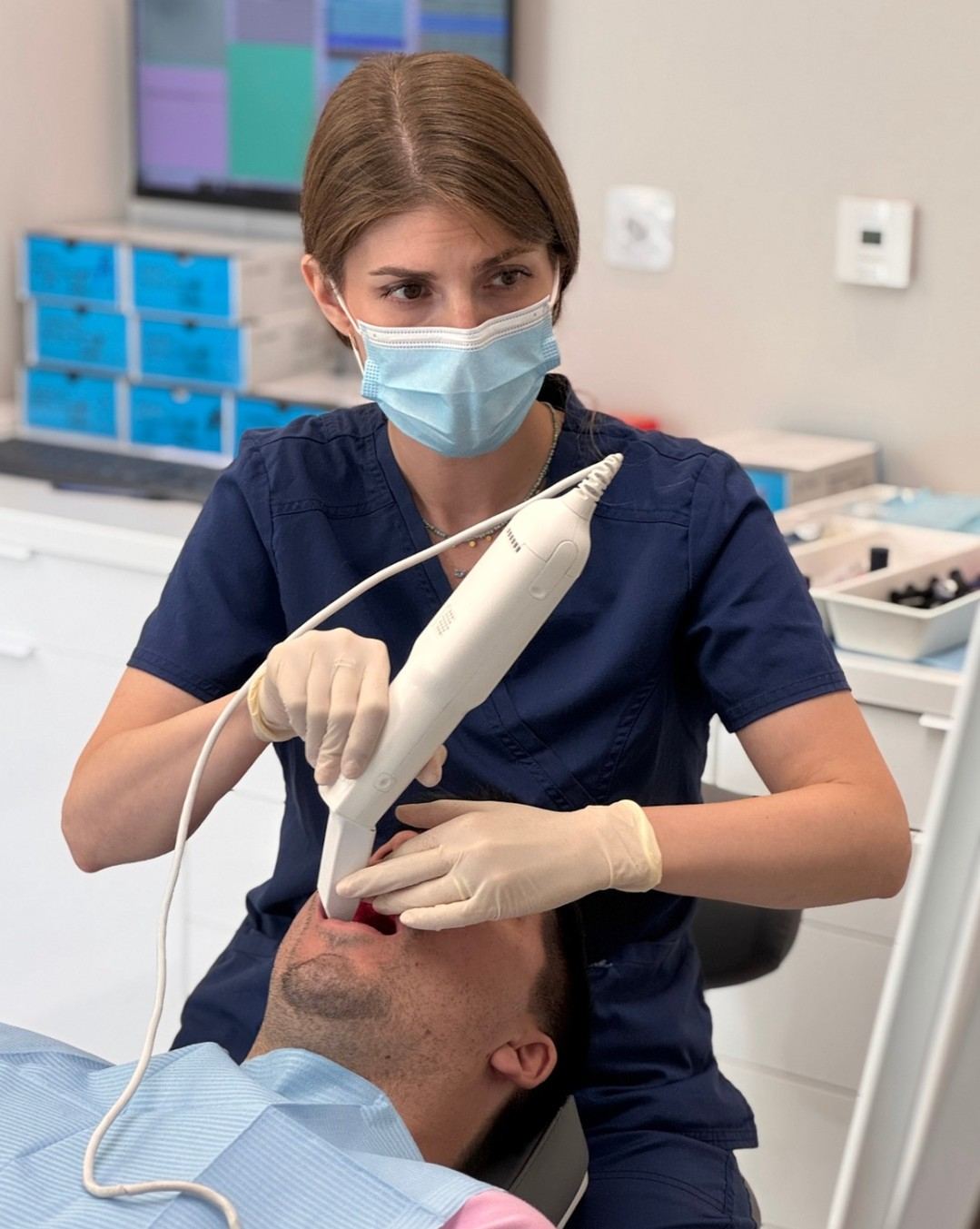
Clear, removable aligners: the most discreet and comfortable option. With our 3D scanner we show you the result before you start. More about invisible orthodontics.
Ceramic braces
Made of ceramic or sapphire in the colour of your teeth, so they are much less noticeable than traditional braces.
Metal braces
Today's braces are smaller and easier to clean than those of a few years ago. They remain a very effective and affordable option.
Lingual orthodontics
The brackets are placed on the inside of the teeth, so they cannot be seen when you smile.
Orthodontics for children
In children we take advantage of growth to guide the development of the jaws and the eruption of the permanent teeth:
- Preventive: space maintainers and removable appliances to avoid future problems.
- Interceptive: corrects abnormal jaw growth in time.
- Functional: helps reshape the jaws and correct habits that deform them.
We recommend a first orthodontic check-up at around 6–7 years of age. See also our children's dentistry page.
Frequently asked questions
What happens if I need orthodontics and don't get it?
Misaligned teeth are harder to clean, which increases the risk of decay and gum disease. They can also wear unevenly and cause discomfort in the jaw joint.
What is the difference between fixed and removable orthodontics?
Fixed orthodontics (braces) stays bonded to the teeth throughout treatment. Removable appliances can be taken in and out; in children they are mainly used to guide jaw growth.
Is there an upper age limit for orthodontics?
No. As long as your teeth and gums are healthy, orthodontics can be done at any age. More and more adults choose invisible aligners because they are so discreet.
Do I need to wear retainers afterwards?
Yes. Teeth tend to move back to their original position, so at the end of treatment we fit fixed or removable retainers to keep the result.