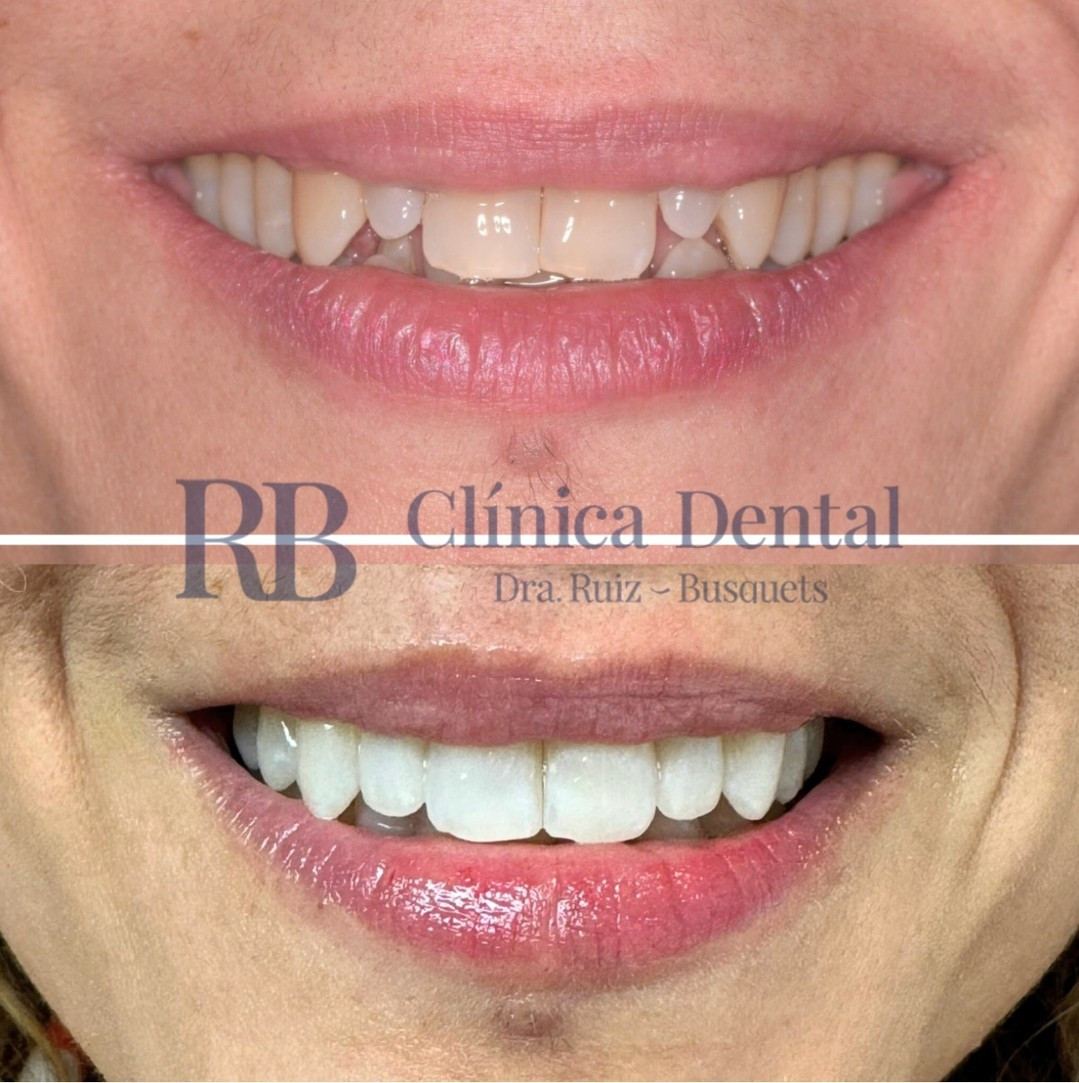
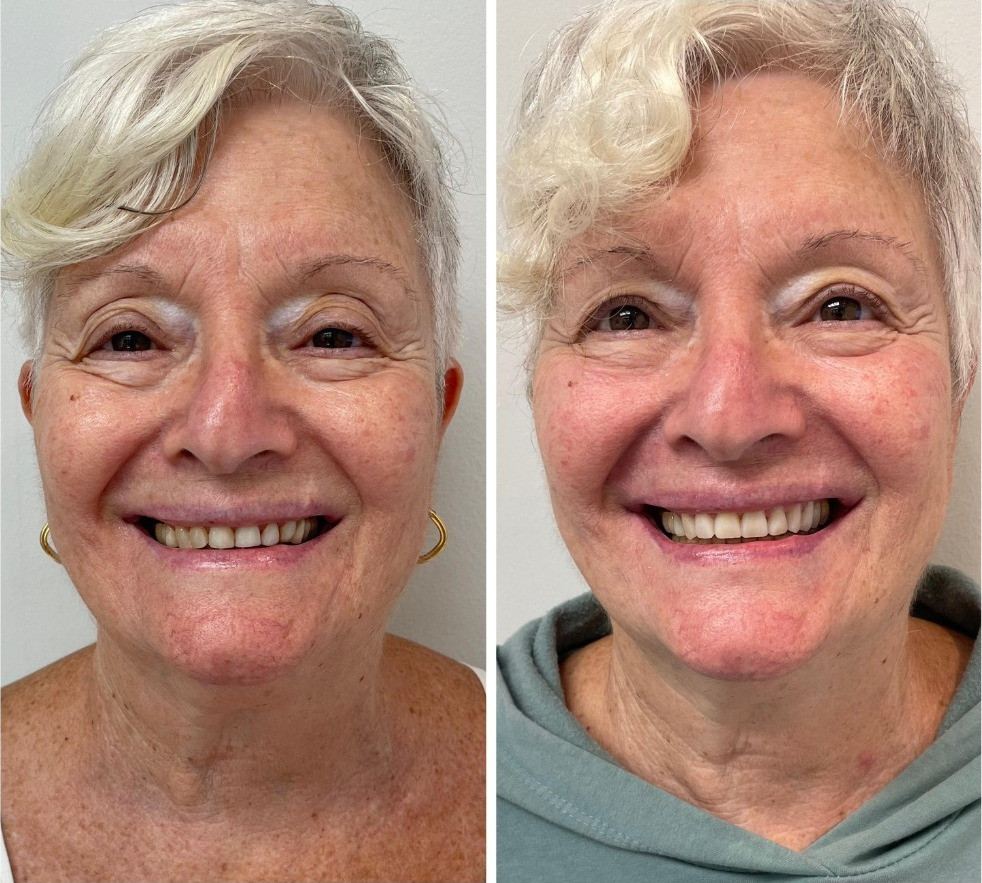
When is cosmetic dentistry recommended?
We suggest a cosmetic treatment when there are:
- Stained or discoloured teeth.
- Wear caused by age or by bruxism.
- Small chips, cracks or uneven edges.
- Gaps between teeth (diastemas).
- Teeth with disproportionate shapes or sizes.
- Old fillings or crowns that look unnatural.
Teeth whitening
It removes stains and lightens the shade of your teeth safely, always under professional supervision. Depending on your case, we suggest:
- In-clinic whitening with light activation: fast results in just a few sessions.
- At-home whitening with custom-made trays.
- Combined whitening: clinic and home for a longer-lasting result.
Dental veneers
Veneers are thin shells bonded to the front of the tooth to change its shape, size or colour. They are suitable for stained, worn or chipped teeth or teeth with small gaps.
- Porcelain veneers: very thin (about 0.3 mm), colour-stable and very durable.
- Composite veneers: more conservative and affordable; useful, for example, to repair wear caused by bruxism.
Smile design
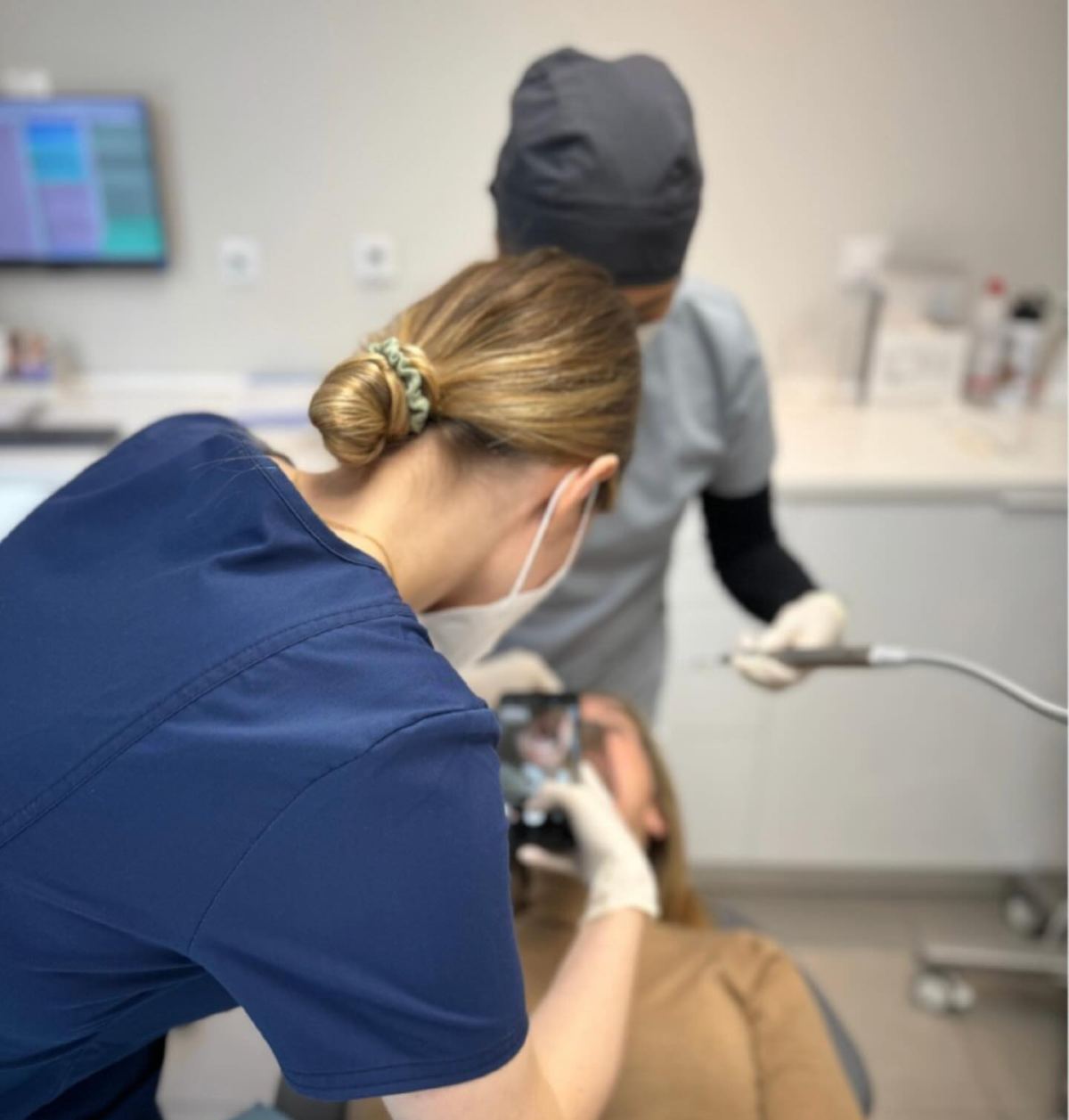
We analyse the proportions of your teeth, lips and face to plan the changes. With the 3D scanner we can preview the result and decide with you before touching a single tooth.
Frequently asked questions
Does whitening damage your teeth?
Professional whitening, properly indicated and supervised by a dentist, does not damage the enamel. What can be harmful are abrasive home products used without supervision.
What should I avoid after whitening?
During treatment it is best to avoid foods and drinks that stain, such as coffee, tea or red wine. We will give you a full list of recommendations.
Veneers or crowns?
If the enamel is in good condition, veneers are usually the more conservative option. If the tooth is badly damaged, a ceramic crown is more suitable. We assess each case individually.
How long do veneers last?
With good care, porcelain veneers can last between 14 and 20 years and composite veneers between 5 and 10 years.